
Scientific Publications:
T. Fransson: Global co-creation of learning resources towards improved quality: Possibility or Utopia? (click pict for link)
Keynote Address at REV 2023.
Summary: Is MOOC really “the solution”? Teachers can collaborate for enhanced quality and reduced workload. Teachers can “shop around” and create their own “teaching lists”. Students can get individual “play lists”.
C. Demazi’ere,T. Fransson: Open self-paced introductory course in nuclear engineering – How to
guarantee student learning (click pict for link)
Science Direct.
Summary: Ease of access to free educational resources on the internet has the disadvantage of resulting in scattered and fragmented knowledge and skills. Students “pick and choose” what they believe to be relevant but lack the necessary overview of the field to select resources adequately and properly. This paper reports on efforts along those lines, which resulted in the planning, development, implementation and offering of three self-paced open course modules in nuclear engineering.
Paper At Proceedings Of The 20th International Conference On Remote Engineering And Virtual Instrumentation (click pict for link)
Open Science Engineering.
Summary: Based on the concepts presented, the use of remote didactical laboratories is analyzed in the context of Learnify which is an online learning platform. Such platform works as a repository of textbook, lessons, and modules to provide students with study assistance and problem-based education worldwide.
A. Zenteno, A. Orellana, A. Villazon, O. Ormachea: Automatic Selection Of Reference Lines For Spectrometer Calibration With Recurrent Neural Networks (click pict for link)
International Conference on Smart Technologies.
Summary: Instrument calibration is a critical but time-consuming process in many scientific fields. In this paper, we present an approach using recurrent neural networks (RNNs) for automatically detecting reference lines required to calibrate a spectrometer with well-known wavelengths of mercury and neon spectra.
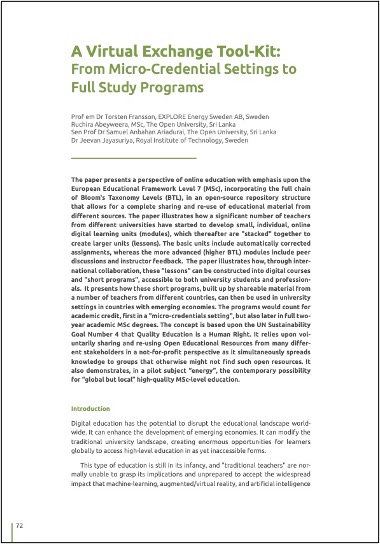
T. Fransson, R. Abeyweera, S. Anbahan Ariadurai, J. Jayasuriya: A Virtual Exchange Tool-Kit: From Micro-Credential Settings to Full Study Programs (click pict for link)
Erasmus+ National Agency for EU Higher Education Cooperation, Virtual Exchange, DAAD: Deutscher Akademischer Austauchdienst, German Academic Exchange Service
Summary: Presents a perspective of online education with emphasis upon the European Educational Framework Level 7 (MSc), incorporating the full chain of Bloom’s Taxonomy Levels (BTL), in an open-source repository structure that allows for a complete sharing and re-use of educational material from different sources.
A. Villazon, O. Ormachea, A. Orellana, A. Zenteno, T. Fransson: Work in progress: A booking system for remote laboratories – The EXPLORE Digital Academy (EEDA) Case study (click pict for link)
Open Science Engineering.
Summary: Remote Laboratories are an important tool for digital education, allowing learners worldwide to get a close to real laboratory experimental experience. Most Remote Labs do not check for exclusive access, thus allowing simultaneous users to interfere with each other. This paper describes Book4RLab, a new general-purpose Booking System for Remote Labs, providing a secure and flexible interface for any Remote Lab to handle individual slot reservations.
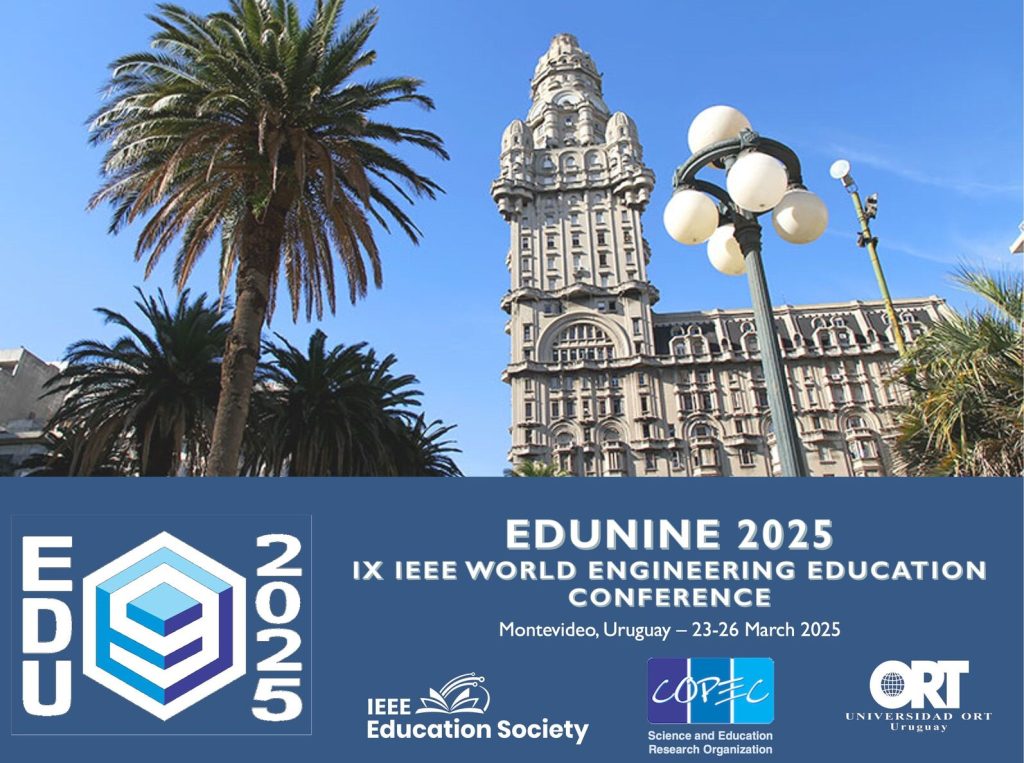
A. C. Da Silva Ovando, N. B. Jaffur, P. Khadoo, Z. J. Chihambakwe, and R. E. Bianchi : Promoting gender equality in STEM professional programs: Initiatives, challenges, and outcomes (click pict for link)
IX IEEE World Engineering Education Conference (EDUNINE 2025). Montevideo, Uruguay. 22-26 March, 2025.
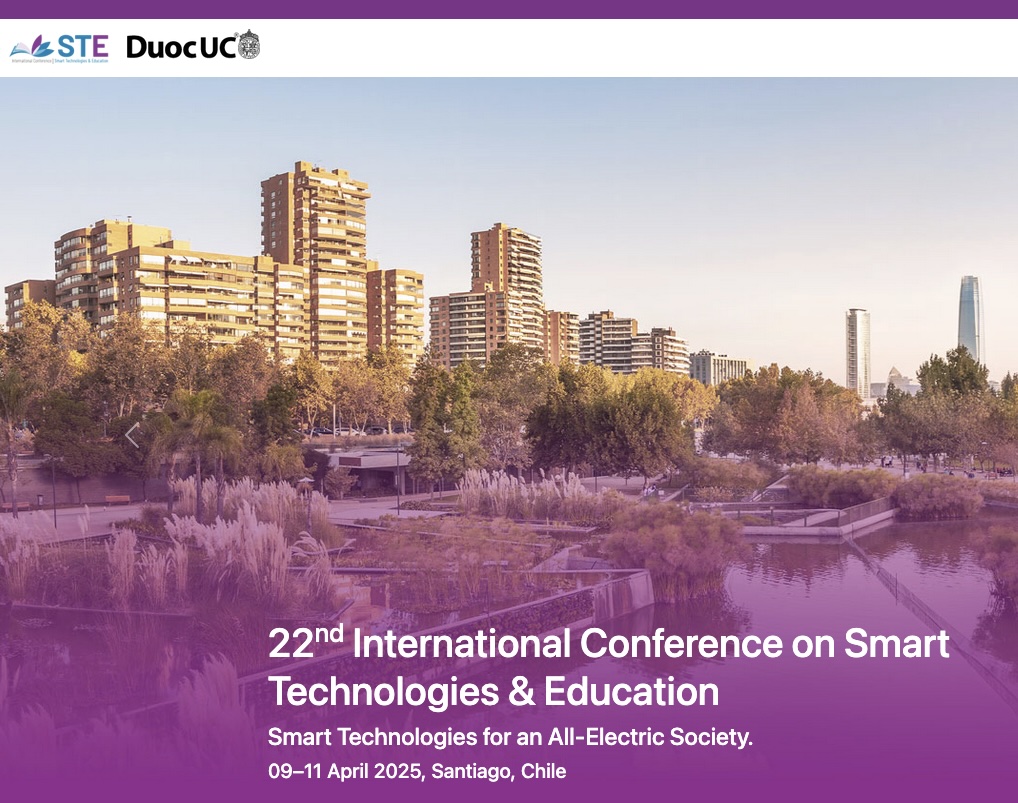
A. Gamboa, B. Pedraza, A. Villazón, O. Ormachea. Turning Real-Time Remote Labs into Ultra-Concurrent Remote Labs.
22nd International Conference on Smart Technologies & Education (STE 2025). Santiago, Chile. 09-11 April, 2025.
T. Zimmer, A. Gamboa, F. Mauvy, A. Villazón, O. Ormachea. Remote Photovoltaic Laboratories: Bridging Continents for Hand-On Solar Module Characterization. (click pict for link)
7th Experiment@ International Conference (expat’25). Azores, Portugal. 2-5 September 2025
(Submitted, under review).